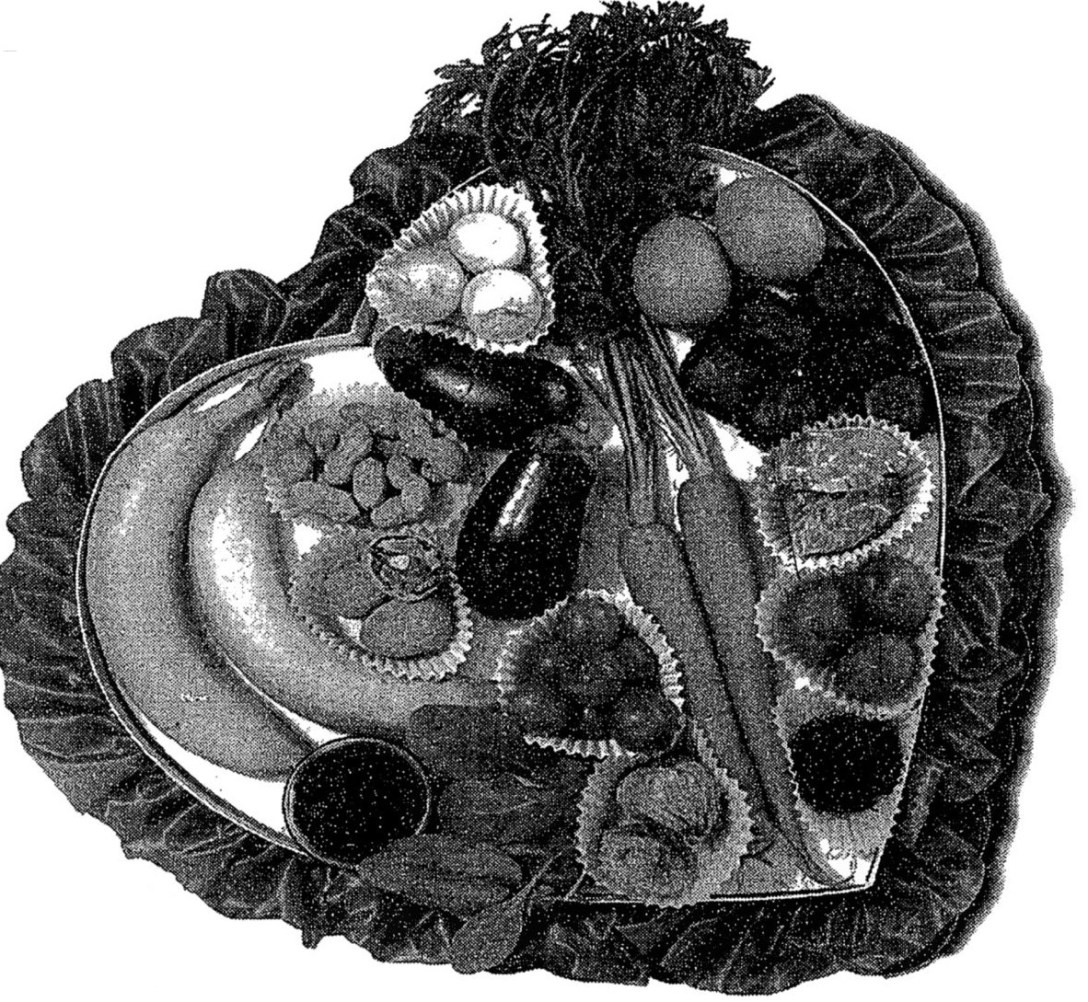

"The range of fruit that is amenable to grilling is virtually unlimited, from relative exotica like mangoes to everyday staples like apples and oranges. As a general rule, though, fruits that come from bushes and ground-hugging plants are often too delicate to stand up to grilling, while those that grow on trees have the requisite sturdiness."
Tag: The New York Times
Barbecue: The (Unwritten) Lore of the Land, by John Willoughby and Chris Schlesinger, May 18, 1994
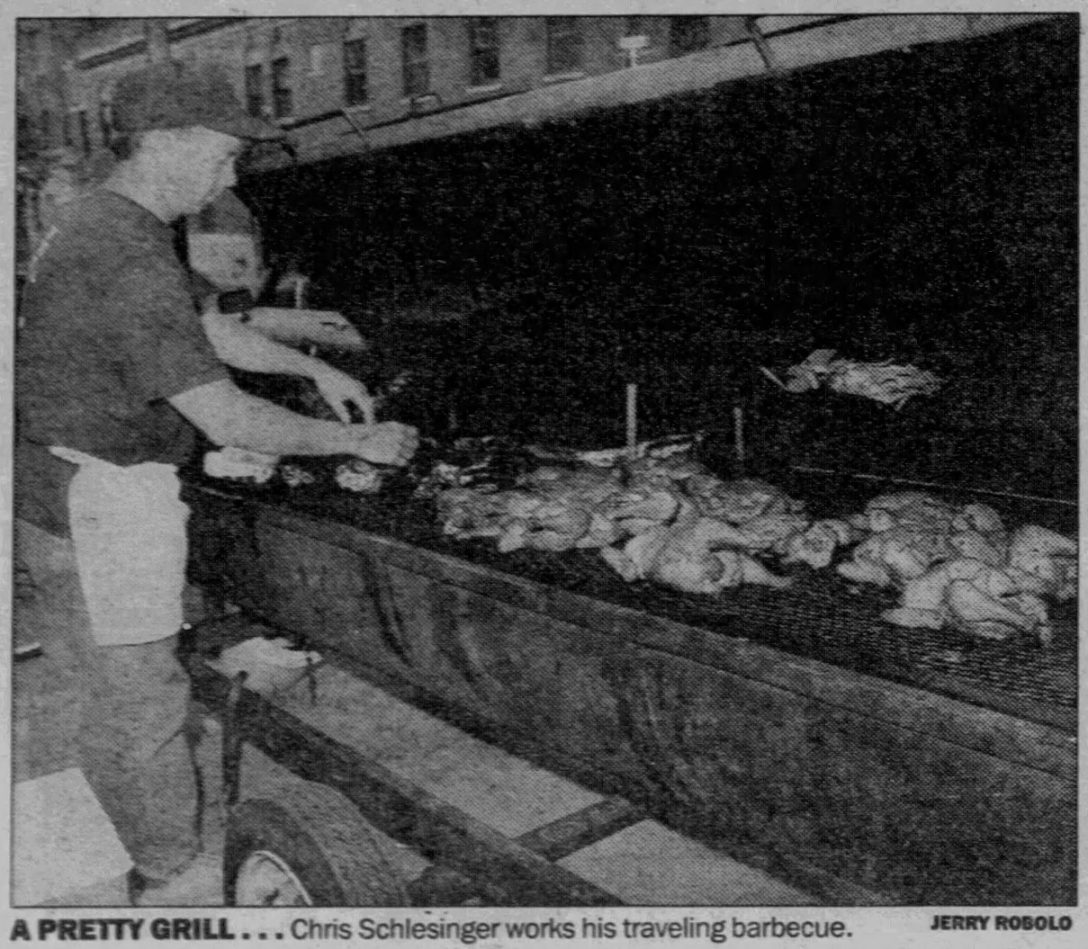
"Barbecuing consists of placing a large, tough cut of meat like beef brisket or pork shoulder in an enclosed space and allowing it to cook indirectly by the smoke from a hardwood fire. The temperature is kept below the boiling point (212 degrees), and the very slow cooking process causes the meat's stringy connective tissues to dissolve into gelatin. This process transforms the tough meat into a tender, smoke-filled treat. In other words, while grilling is quick and hot, barbecue is slow and low."
The Chef as Magician In Love’s Kitchen, by John Willoughby and Chris Schlesinger, Feb. 8, 1995
"With its dual character as both a necessity of daily life and a delight to the senses, food has a long history as a tool of sorcery. This tradition originated in the days when the physical world was considered merely an imperfect reflection of the spiritual world, and every mundane act was therefore rife with cosmic implications."
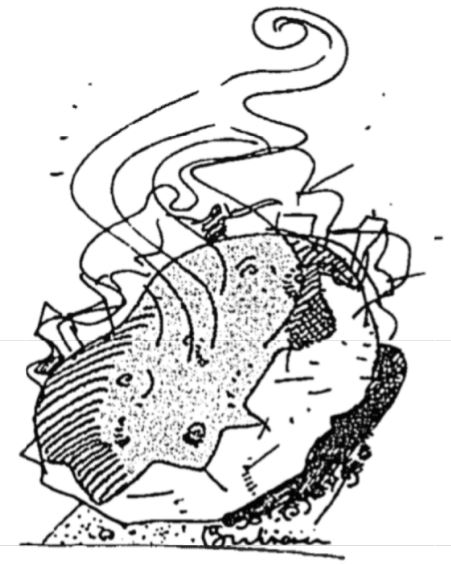
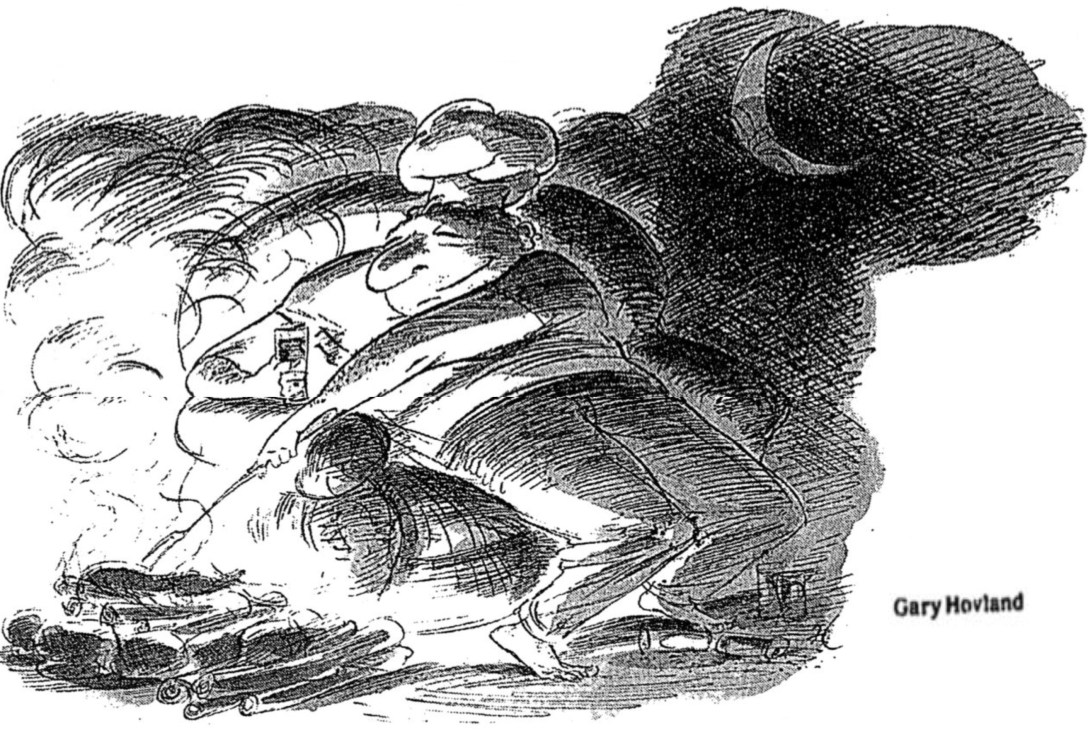
From the Ashes, Dinner! by John Willoughby and Chris Schlesinger, Oct. 25, 1995
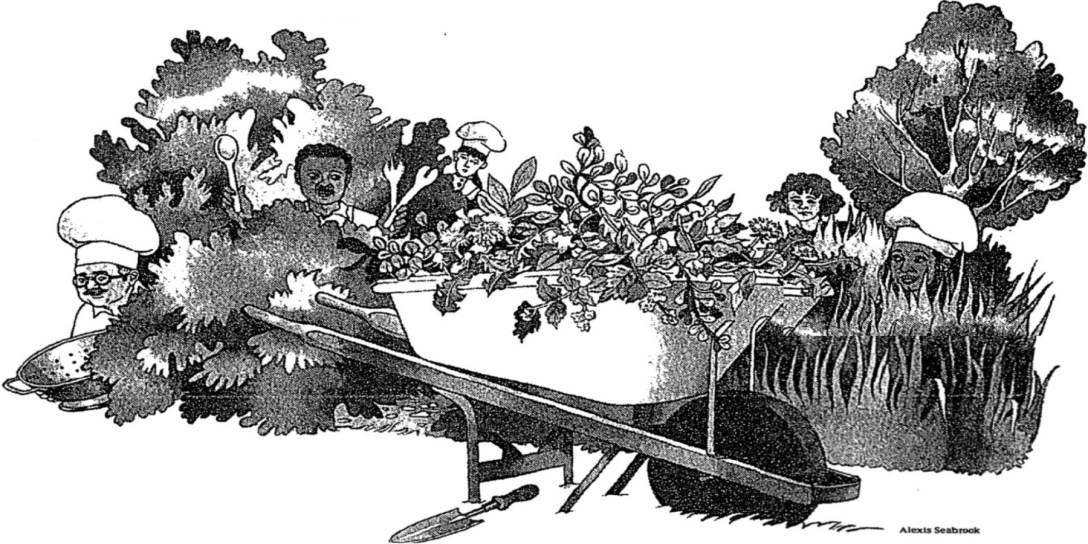
A Weed By Another Name: Salad, by John Willoughby and Chris Schlesinger, May 29, 1996
"In the South, people still gather wild field cress, also known as 'creasy greens.' Field cress can be eaten raw only when very young, but a less aggressive version of its rather biting flavor can be approximated by garden cress or, most commonly, by watercress. All of these cress cousins have small, glossy, dark-green leaves on tender, rather leggy stems, and varying degrees of pepperiness."